If Recycling Is the Answer, We're Asking the Wrong Question



7 min
By Rachel Jackson, Continuous Improvement Lead, Codex.
For years, we’ve celebrated recycling as the gold standard of sustainability. Businesses have proudly reported recycling rates, households have separated waste into coloured bins, and governments have invested heavily in collection and processing infrastructure. Recycling rates appear in ESG reports, are highlighted in social media posts and are used as evidence of environmental progress.
However, while recycling remains an important part of sustainability, it has also created an unintended consequence: many organisations now see recycling as the solution, rather than the last resort it was always intended to be.
And if recycling is the answer, then we're asking the wrong question!
The real question is not "How can we recycle more?" It’s "How can we avoid creating waste in the first place?"
Through my studies in Circular Economy at Munster Technological University (MTU), I discovered that the future of sustainable business is not about managing waste more effectively. It's about preventing waste in the first place. This shift requires individuals and organisations to move beyond a recycling mindset and embrace a much broader framework for retaining value, extending product life, and reducing resource consumption.
Why Recycling Alone Is Not Enough for a Circular Economy
Recycling undoubtedly delivers environmental benefits. It diverts waste from landfill and lowers manufacturing carbon emissions by reducing the need to extract, transport and process virgin raw materials, which are often the most energy-intensive parts of production. However, recycling is far from a perfect solution.
Every recycling process consumes energy, labour, water and transportation. In many cases, materials degrade during the recycling process and can only be recycled a limited number of times before they become unusable. This phenomenon, known as downcycling, means that value is often lost even when materials are successfully recovered.
Consider a typical office chair. If it reaches the end of its life and is recycled, the materials are recovered, processed and reintroduced into manufacturing streams. This is certainly preferable to landfill, but significant value has already been lost. The energy, labour, design effort and manufacturing resources invested in producing the chair have effectively been destroyed.
What Is the Circular Economy? From Recycling to Waste Prevention
The difference between the circular economy and a traditional linear economy lies in how resources are managed: while the linear model follows a "take, make, use, dispose" approach, the circular model aims to keep products and materials in use for as long as possible through reuse, repair, and, as a last resort, recycling.
The Circular Economy challenges us to look beyond waste management and ask a different question: How can we keep that chair in use and preserve its value for as long as possible before recycling becomes necessary?
The question is no longer how well we recycle. It is how effectively we prevent waste from being created in the first place.
We are familiar with the 3Rs of Reduce – Reuse – Recycle, but circular thinking expands this into ten R words. This framework ranks actions according to their ability to retain value and minimise environmental impact.
Priority |
R |
Meaning |
R0 |
Refuse |
Avoid unnecessary products and consumption altogether |
R1 |
Rethink |
Change how products are used to maximise utilisation |
R2 |
Reduce |
Use fewer materials and resources |
R3 |
Reuse |
Use the product again for its original purpose |
R4 |
Repair |
Maintain and repair products to extend their life |
R5 |
Refurbish |
Restore products to good working order |
R6 |
Remanufacture |
Use components in new products |
R7 |
Repurpose |
Use for a different function |
R8 |
Recycle |
Recover materials for reprocessing |
R9 |
Recover |
Recover energy from waste |
This shows that circularity is a spectrum rather than a single activity, and recycling sits near the end. This is not because recycling lacks value, but because higher-order interventions retain much more of the product's embedded value. Recycling is important. But from a circular economy perspective, it often means we've already missed the opportunity to retain more value. Circular economy thinking asks us to focus on R0 to R7; only then do we arrive at Recycling and Recovery.
The Business Case for Circular Economy Principles
In reality, businesses cannot always prioritise the highest R. Refusing consumption, reducing purchases or extending product life may be the most environmentally beneficial option, but organisations must also remain financially viable. The challenge isn’t to pursue circularity at any cost. It's to identify opportunities where environmental value and business value align. Businesses that succeed in the circular economy often recognise waste prevention as a source of efficiency, resilience, and competitive advantage rather than simply an environmental obligation.
Why the Most Sustainable Option Is Often Not Recycling
Many organisations celebrate recycling achievements while overlooking more impactful opportunities higher up the hierarchy.
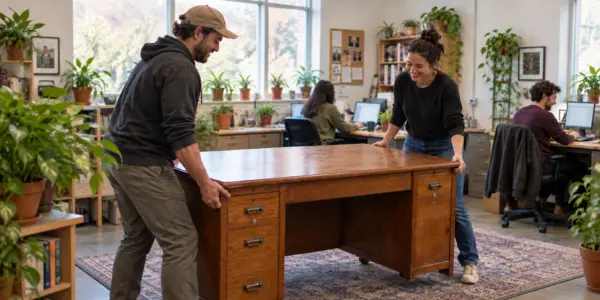
Take office furniture as an example. Recycling an old desk may recover timber and metal components. However, donating the desk to a school, charity or community organisation retains significantly more value. The desk continues to serve its original purpose without requiring new materials, manufacturing processes or transportation impacts associated with replacement products. After all, a desk isn’t sustainable just because it’s recycled. It’s most sustainable when it keeps being used.
The same principle applies to technology. A recycled laptop is preferable to landfill, but repairing, refurbishing, or redeploying it internally extends its useful life and preserves more of the resources embedded in it.
Shifting The KPI Conversation to Redefine Business Success
Historically, organisations measured success primarily through financial metrics. Revenue growth, profit margins and cost reduction remain essential indicators. However, they’re no longer sufficient on their own, and organisations increasingly incorporate environmental, social and governance (ESG) measures alongside traditional financial performance indicators.
In terms of sustainability programmes, organisations have previously focused on waste metrics. They have often measured success by waste produced, the proportion recycled, and the volume diverted from landfill. While these metrics remain important, they focus mainly on managing waste as it’s created rather than preventing it in the first place.
Circular organisations take a different approach. Rather than focusing on how waste is managed at the end of a product's life, they measure ways to prevent waste from the start. They aim to extend product life, maximise resource use, and retain as much of the embedded value as possible for as long as possible.
This distinction is important when measuring success: recycling metrics show how well an organisation manages waste, while circular economy metrics show how effectively it prevents waste from being created in the first place. Measuring recycling rates and tonnage diverted from landfill is relatively straightforward. Reuse and value-retention activities are often less visible, yet they can deliver greater environmental value. Their benefits also extend beyond environmental performance: retaining value can reduce procurement costs, strengthen community partnerships, improve resource efficiency and support organisational resilience.
How Employee Engagement Supports a Circular Economy
Sustainability managers don't deliver a circular economy; employees deliver it through thousands of decisions made every day. Moreover, a circular economy isn't created when a sustainability manager publishes an annual report. It’s created when:
- An employee repairs a chair rather than replacing it.
- A team reuses furniture from another location.
- Procurement chooses durability over lowest cost.
- A manager questions whether a purchase is needed.
- IT upgrades equipment instead of disposing of it.
- Products are rehomed rather than discarded.
The most important sustainability decisions often don’t appear in a sustainability report.
How Businesses Can Apply Circular Economy Principles to Prevent Waste
Recycling will continue to play an essential role in sustainable businesses, but it should no longer be the starting point of a sustainability strategy. The Circular Economy reminds us that every product contains embedded materials, energy, labour and value. The longer we preserve those resources by refusing, rethinking, reducing, reusing, repairing and refurbishing, the greater the environmental benefit. Organisations that embrace circular thinking will move beyond waste management towards value preservation, designing systems that keep products, materials and resources in use for as long as possible. The question for every organisation is no longer "What happens when we throw something away?" but "How can we ensure it never becomes waste in the first place?"
---
Our commitment to environmental sustainability is at the heart of everything we do at Codex. By implementing energy-efficient measures, practising waste reduction and recycling, nurturing a sustainable supply chain, and engaging our employees, we continue to lead by example and create a positive impact on the environment.
Learn more about our Sustainability initiatives at Codex.
RELATED ARTICLES:
Nature Isn’t One Thing: What “Inspired by Nature” Means for SME’s
Latest Posts

 Neuroinclusion in the Workplace
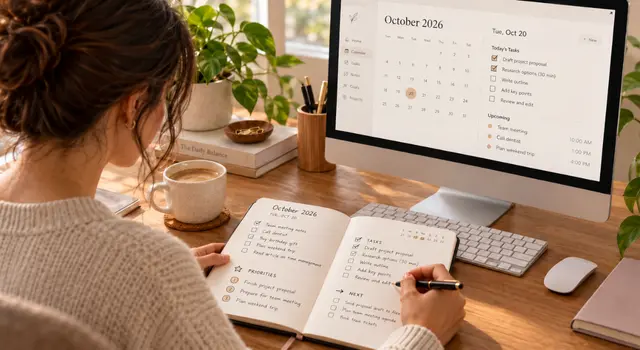
Different Working Styles Need Different Ways to Plan
Why do some planning systems work brilliantly for one person but not another? Dr Áine O'Dea explores how executive functioning, neurodiversity, and different working styles shape how we plan, prioritise, and manage our workday.

 Workplace Wellbeing
6 Ways to Move More and Support Mental Health at Work
Supporting your mental health at work can be as simple as moving more throughout the day. Discover six practical ways to build movement into your workday, whether you work in an office, remotely or in a hybrid role.