Exploring the Power of Positive Organisational Culture


13 min
Over the last four years, we have increased our GPTW employee trust score at Codex by 10% and our annual revenue by over 18%. But in such challenging times for businesses worldwide, how have we achieved both successes? It is simple: we refocused our organisational culture to actively engage and listen to our customers and employees.
We are not the only organisation to see this correlation between employee engagement and profitability; a recent McKinsey study found organisational culture to be the most significant predictor of success.
If you have ever thought about making subtle – or dare I say, drastic - changes to your company culture, I implore you to read on as I make a business case for why company values should be an essential consideration for all CEOs and business leaders. I'll also share how we developed our values at Codex, what we learned from the process, and clear steps you can take to start building a successful organisational culture today.
What is Organisational Culture?
Somewhere along the way, the definition of organisational culture has become wrongly synonymous with buying ping-pong tables, beer kegs and free food. Likewise, company values have long been considered a concept reserved exclusively for Google, Apple, and similar tech giants with deep pockets.
However, I have learned that building a positive organisational culture has nothing to do with employee extras (though those are definite niceties) and everything to do with the values and beliefs you set in your organisation.
Organisational culture, in its correct form, is the collective ethos of an organisation: its shared values, goals, attitudes, and practices that characterise who it is, what it does, why it does it, and how it does it. Organisational culture revolves around how individuals feel about their work, the principles they uphold, the direction they envision the business taking, and the steps individuals can take to get there.
Why Organisational Culture Should be Important to Business Leaders
A robust organisational culture matters because when you look after your employees, they naturally carry that experience to customers. Regardless of your company’s core beliefs, treating everyone fairly and making sure they know how much you value them is crucial to building a successful workplace culture.
On the other hand, poor organisational culture can negatively impact business performance and employee morale. Ultimately, organisations with poor, draining workplace cultures are more likely to lose employees and customers.
In an era colloquially dubbed The Great Resignation - where employees are still quitting their jobs in record numbers - establishing a positive organisational culture can no longer be considered an optional requirement for companies but a business necessity. For one, the hidden costs of employee turnover can significantly impact an organisation’s profit and success, as well as its overall morale and culture. So, if you are a CEO or business leader who hasn't done this yet, I encourage you to prioritise setting your company values in 2023. Need further proof that this is a valuable exercise? Here are some research findings and stats that substantiate this:
- 76% of Irish companies that have successfully created a positive culture are more than twice as likely to expect double-digit business growth.
- 79% of employees in companies with a positive organisational culture plan to stay in their jobs long-term.
- 71% of employees in a positive culture feel it is okay to speak up about issues, while 68% say it is easy to get support when needed.
- In a positive organisational culture, 66% of employees feel empowered to share ideas, and 60% find collaboration easier.
This shows that leaders who reinforce company values create a culture where business thrives.
However, while creating a thriving organisational culture starts at the top, it is not solely the CEO's responsibility. Everyone in the organisation, from the CEO to the newest intern, must embrace the organisation’s culture to succeed. It involves putting your underlying values into action. The business is responsible for ensuring each employee knows the requirements and acts accordingly. A strong culture should naturally foster inquiry, respect, cooperation, and employee wellness.
Our Journey at Codex – Setting A New Tone
Since our inception in 1979, Codex has strived to be a customer-centric company that empowers our customers with innovative office solutions. I am proud to say we've delivered on this over the last 44 years. We have grown from a one-person operation to over 80 staff members and €33 million in turnover by staying true to our vision.
Our business has completely transformed as we have scaled over the years. We have made new acquisitions, heavily diversified our product range, expanded our customer base, and even tried our hand at some new ventures, some of which have been more successful than others. Although we have always had a clear vision (customer experience!) and a robust set of beliefs that drive our business forward, the company has never documented or communicated our values to the broader team.
When I started as CEO at Codex, I had ambitious growth goals I wanted the company to reach over the next 5-10 years. To achieve these goals, I saw a clear pathway to success. In my mind, it wasn't about ramping up our sales efforts; it was about taking a step back and figuring out who we were as a company and how we wanted to run the business. To quote Simon Sinek, I felt we needed to start with the Why.
One of the first tasks I set out for myself in 2019 was to appoint a new Senior Management Team. We wanted to ensure our business and culture objectives aligned as we continued to move with the times and changing customer requirements. Once I was confident I had the right team in place, one of the big projects we set out to work on in late 2020 was to develop our company values and objectives and, ultimately, figure out our why.
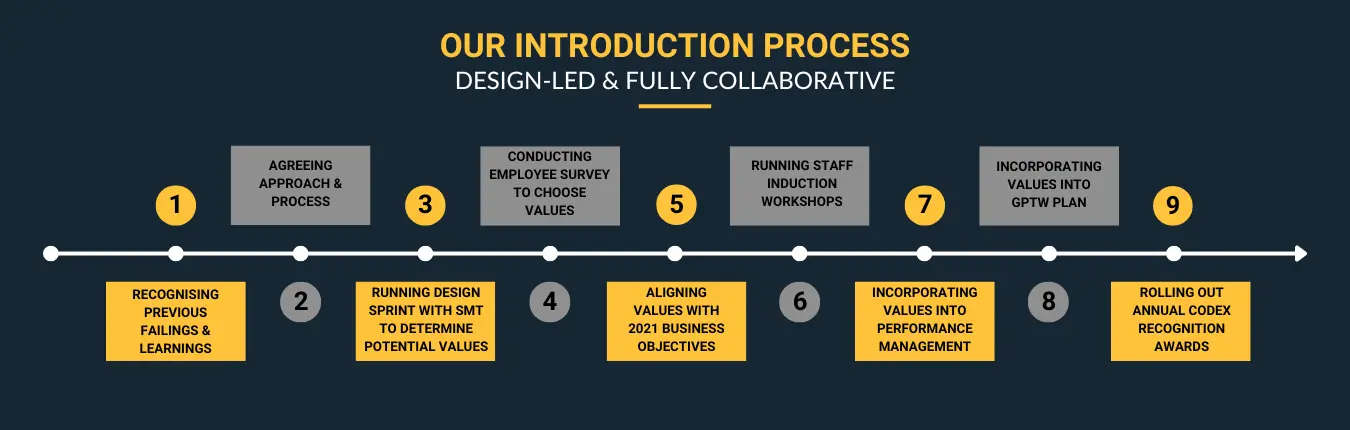
Once we had agreed on the approach we would take for this project, we brought on the team from Lean Disruptor, who ran several Design Sprint sessions to isolate the areas that we felt we were performing well in as a company and develop the skill sets we needed as a collective team to get us to achieve our long-term goals. This format helped us stay honest throughout the process and ensure we matched the values Codex started with, while future-proofing ourselves in line with our long-term objectives.
At this point, the SMT and I isolated a list of potential company values in our brainstorming session and selected a core three to embed in Codex's organisational culture; we then put it out to staff in an employee survey to help us choose the remaining two values.
Today, we have five core values that we run our business with: Customer First, Innovation, Integrity, Belonging, and Ambition. These company values don't just exist on paper or in a file buried deep in our SharePoint site; they have become the crux of who we are as a team, how we hire new staff members, and how we make tough decisions in the day-to-day running of our business.
Our Values

Customer First
Codex has a customer-first ethos, meaning we will always prioritise your needs.

Innovation
We like to push the envelope at Codex and love finding new, creative ways to solve our customers' challenges.

Integrity
We do not believe in cutting corners at Codex; we believe in doing things correctly, not quickly.

Belonging
We are a family-run business and value the connections we form with our customers.

Ambition
We have worked hard for the success we have achieved, and continuous improvement is what drives our continued growth & development as a business.
In a 2021 GPTW poll, 33% of Irish employees said they knew their company had values but couldn't say what they were. If that sounds familiar, here are a few tactics we have found helpful in fully incorporating our core values:
- We tie our company values to our annual company objectives.
- We refer to our company values in any communications sent to staff.
- We incorporate our values into our onboarding presentations for new staff.
- We send quarterly staff surveys to gauge areas we can improve throughout the year.
- We rolled out staff recognition awards in 2022 to acknowledge staff members for excellently upholding the values.
- We tied our quarterly company days to either a company value or an area for improvement identified in our annual GPTW survey.
While this exercise started at the top, one of the most important reasons it succeeded is that it put employees at the centre. These company values were not conceived in isolation but devised as a collective effort influenced by our employees and the entire organisation, so the whole team felt they had a stake in them. Some of the most significant company wins that we have seen during this time include:
- Growth in new categories – Furniture sales have increased by 300% since 2019.
- Engagement (and trust) of our staff – We ranked in the top 30 SME Great Place to Work businesses in 2022 with an average trust score of 78/100.
- Investment in the Irish market – over €20m of products and services bought in the local economy in 2022.
- Investment in technology and innovation – €2m invested in IT infrastructure and solutions in the last three years.
- Increased customer experience – 89% customer satisfaction score in 2022.
- Ongoing talent development – 16 internal staff movements since 2019.
- Increased staff involvement – 12% increase in 2022 in staff feeling involved in decision-making.
Our People is Where Our Culture Begins
Codex’s culture is centred around our vision and purpose – to help Irish workplaces power their people, productivity, and potential. We believe integrity, honesty, and trust are central to our organisational culture, and that we manage all interactions with colleagues and customers with the utmost respect and dignity.
As a leader, your vision and values are regularly tested by the company's and society’s dynamics. Managing an established family-owned business requires a significant commitment to the well-being of the business, customers, and various stakeholders.
We are planning for the next generation, and I truly believe leading means identifying and building a vision and values for the future. Each generation impacts the company's growth, and despite the challenges, we understand the benefits of doing things right.
Evaluating our strengths as a company over the past forty years of business while future-proofing where we would like to go and what skills we need to get there has created a very much employee-oriented environment at Codex.
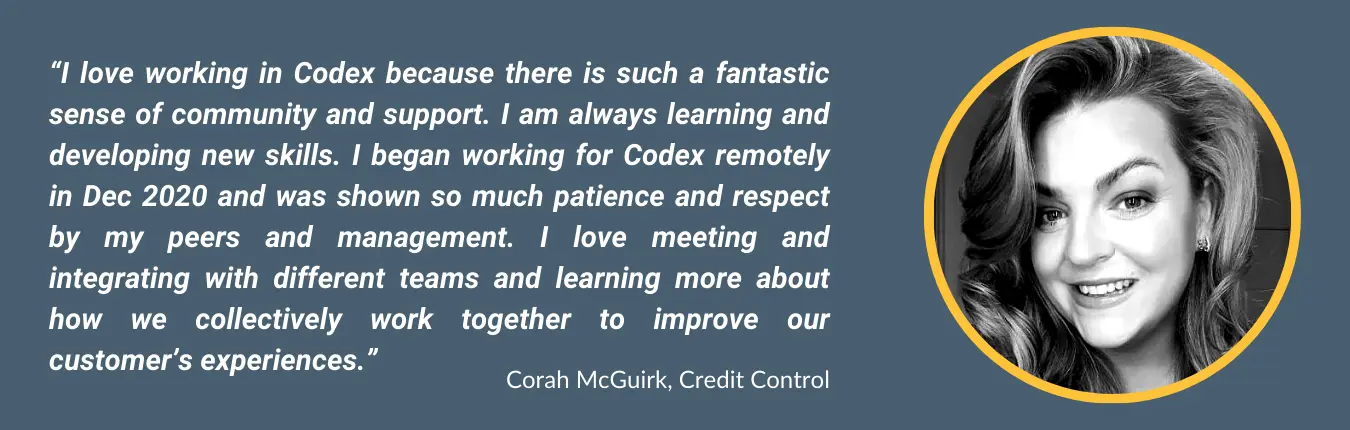
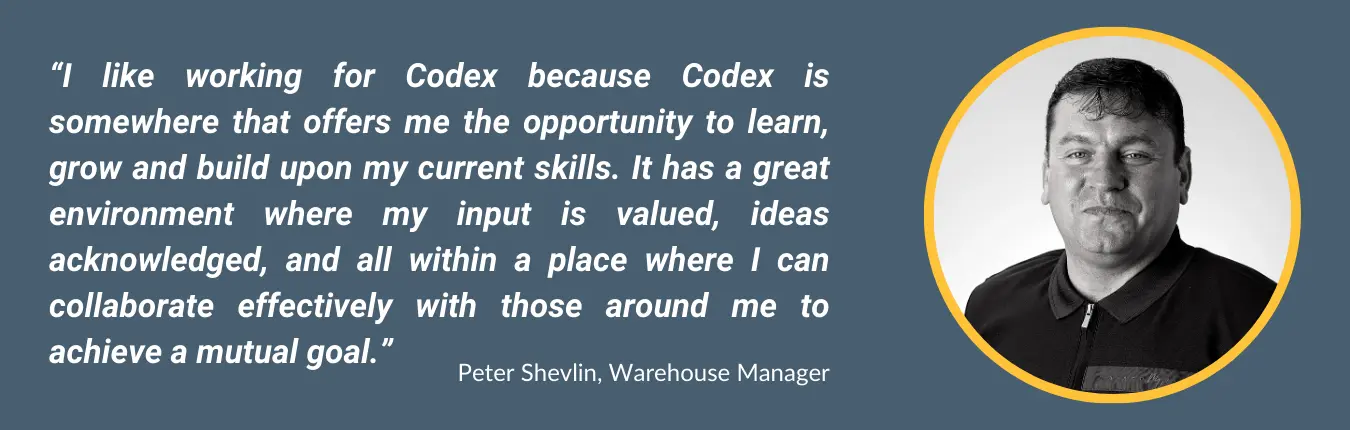
Codex has achieved a lot because of our employees and the culture they have fostered. Great benefits and a fun, dedicated workplace that keeps customers happy fit with Codex’s approach to organisational culture. We encourage creative thinking in the workplace. We celebrate innovative and diverse thinking. We recognise that everyone plays a part in delivering an excellent customer experience.
What I Learned: Fostering a Thriving Organisational Culture
Since becoming CEO, I have faced many challenges, including a mammoth ERP migration, COVID-19, and ongoing supply chain challenges. If there is one thing I have learned along the way, it is that usually, every challenge comes with an opportunity, but before you get there, you sometimes must make a tough decision. Whenever I face a complex scenario or dilemma, I ask myself, “Am I staying true to our values?”
This feeds into our always-learning philosophy. For me, as CEO, it is no different. Restructuring our organisational culture proved a vast learning curve for me. It taught me that our values should always lead our strategy, not the other way around. Our values should always answer the ‘Why.’
It also means accepting that change takes time. Cultural change does not happen overnight; it requires a continuous, collaborative effort. Finally, and the most critical learning point, creating a positive organisational culture is not about starting at the top down but putting employees at the centre.
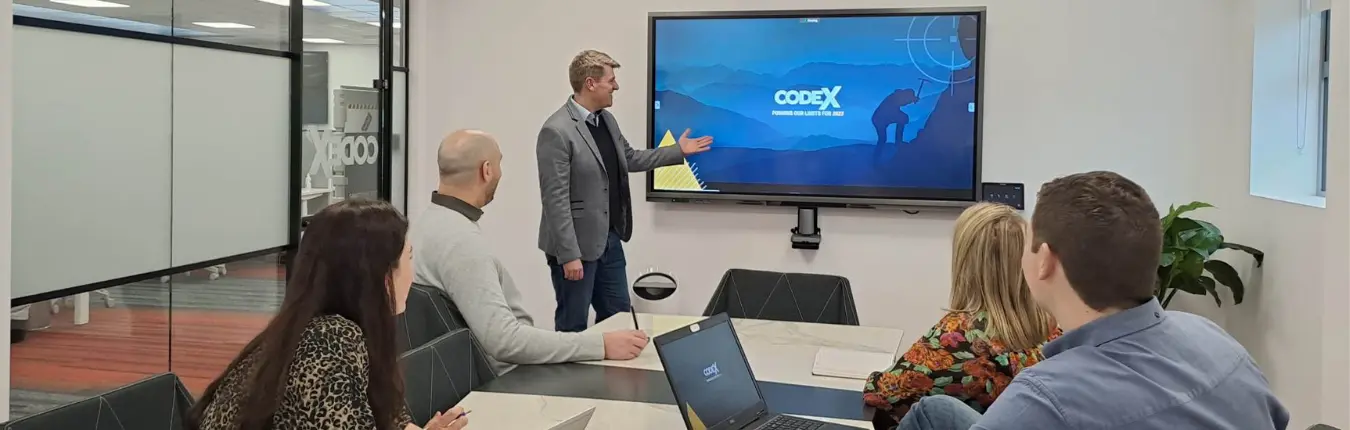
Organisational culture is a business’s number one asset. When your strategy and culture align, your organisation is more likely to deliver steady, attractive profitability and growth results. Your employees’ energy and self-assurance reflect that culture. They have every right to be proud of their work's outcomes. A strong workplace culture improves employee engagement, the work environment, and how well an organisation represents its objectives.
How You Can Get Started in Your Own Company
Positive organisational culture is one of the few sources of long-term competitive advantage still available to organisations today. And while cultural change can be daunting for any organisation, it is possible. It just takes time. Successful leaders stop looking at culture with frustration; instead, they use it as a critical management tool through strategic leadership development, professional growth programmes, and training opportunities.
Firstly, leaders need to understand the culture that prevails within their organisation. They can then define a desirable target culture to work towards, involving everyone from the top down. From this, they can grasp the fundamental processes of organisational design, leadership alignment, organisational discourse, and ambition articulation. The following are some of the steps we took when we first started looking into the culture here at Codex and could prove very beneficial for your organisation also:
- Get your team behind it – Make sure your Executive team is on board and believes in this project, as they will be the primary drivers of its success.
- Decide the process – Outline who will be involved, the key timelines, and the steps required to execute the project.
- Evaluate honestly – Brainstorm what your company is doing well and highlight the skill sets you need to achieve your long-term goals. Commit to being honest, critical, and forthcoming at this stage.
- Get feedback from staff in your organisation – You are more likely to get buy-in if the larger team feel they have had an opportunity to contribute their thoughts and have a say in setting this new tone.
- Accept the temporary disruption – Introducing new values may bring a new way of doing business. Sometimes, this may mean declining opportunities that don’t align with your values.
- Make sure your core values exist beyond a sheet of paper – They should ideally be reinforced in everything you do (i.e., role definitions, performance management, and professional development plans).
- Incorporate your values into your recruitment processes and onboarding documents – When looking for talent, you choose candidates that closely align with your core values.
While the above may seem time-consuming, building, growing, and living your company values is one of the most worthwhile exercises you can do, given the impact this has had on our organisational culture. The benefits we have found include an increasingly diverse array of service offerings and vigorous growth, to name a few.
In the end, if you have successfully established an environment where employees feel excited about coming into the office, feel a sense of purpose about the work they are carrying out, and feel they have a high level of work-life harmony, then you are doing things right.
Check out how Codex continues to embrace organisational culture through Our Values.
If you have questions about anything discussed in this blog or want to learn more about Codex's journey to a positive organisational culture, connect with me on LinkedIn!
RELATED ARTICLES:
Latest Posts


 Neuroinclusion in the Workplace
Different Working Styles Need Different Ways to Plan
Why do some planning systems work brilliantly for one person but not another? Dr Áine O'Dea explores how executive functioning, neurodiversity, and different working styles shape how we plan, prioritise, and manage our workday.

 Workplace Wellbeing
6 Ways to Move More and Support Mental Health at Work
Supporting your mental health at work can be as simple as moving more throughout the day. Discover six practical ways to build movement into your workday, whether you work in an office, remotely or in a hybrid role.