What Makes an Office THRIVE?



6 min
For a long time, offices were designed around efficiency and availability: rows of desks, fixed layouts, and the assumption that everyone works best in the same way. But today’s workplaces are more complex, and so are the people within them. To thrive, an office needs to do more than house employees; it needs to actively support how people think, focus, collaborate, and recharge. A thriving office is one that understands human difference and designs with it in mind, creating environments where people feel comfortable, capable, and able to do their best work.
Thriving Starts with Understanding People
At the heart of any thriving workplace is a simple fact: people work differently, and that difference is completely normal. Some employees thrive in busy, social environments, while others need quiet and structure to focus. Some people are energised by collaboration, while others do their best thinking independently. These differences can relate to personality, role, life stage, or neurodiversity, and they often change throughout the day.
Yet many workplaces still assume that:
- Open collaboration suits everyone
- Constant availability equals productivity
- Silence or solitude signals disengagement
In reality, these assumptions often exclude neurodivergent employees, introverts, and those performing deep, cognitively demanding work.
Workplace research continues to show how strongly wellbeing, flexibility, and autonomy influence engagement and retention, reinforcing that productivity isn’t just about output; it’s about how supported people feel while they work. When offices are designed around a narrow definition of productivity, they unintentionally exclude a significant portion of the workforce. Thriving offices start by recognising this diversity and designing spaces that adapt to people, rather than expecting people to adapt to the space.
Intentional Zoning: Balancing Focus and Collaboration
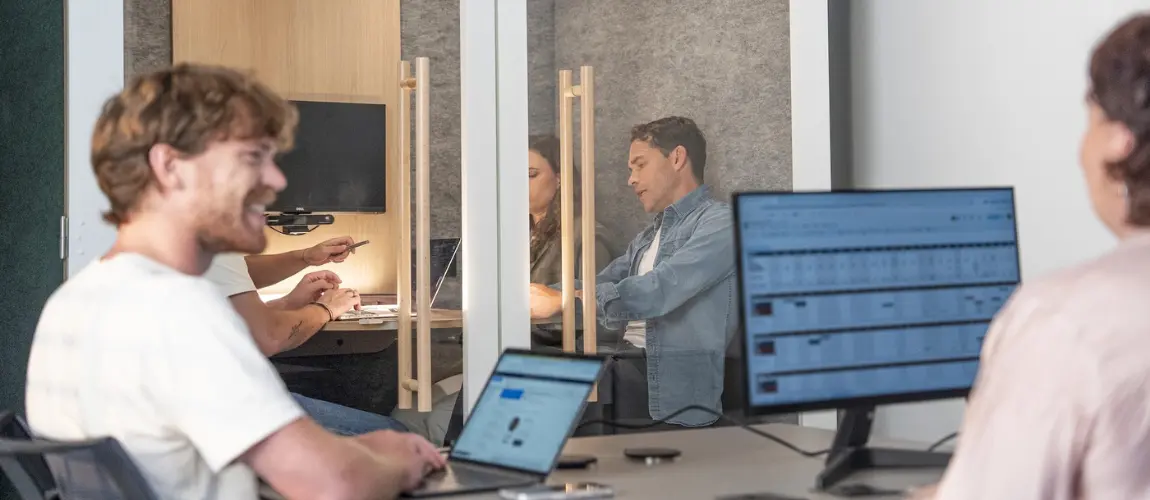
One of the biggest shifts in workplace design is the move away from uniform layouts toward intentional zoning. Instead of asking employees to do every type of work in the same environment, thriving offices provide a range of spaces that support different tasks and energy levels. These typically include quieter focus areas for deep, concentrated work and cognitive recovery, particularly for neurodivergent employees; collaborative zones for teamwork, meetings, and idea sharing; and softer, regenerative spaces where people can step away, decompress, or reset during the day.
FOCUS ZONES
- Low noise
- Minimal visual distraction
- Predictable layouts
COLLABORATION ZONES
- Designed for teamwork, ideation, and discussion
- Acoustically treated to prevent spill-over noise
- Equipped with flexible furniture and technology
REGENERATIVE SPACES
- Quiet retreat areas
- Spaces for decompression or emotional regulation
- Often overlooked, yet critical for sustained performance
Clear zoning removes much of the unspoken tension from the workplace — people know where collaboration is encouraged, where quiet is respected, and where it’s okay to take a pause. This balance is particularly important in hybrid organisations, where the office is increasingly used for purposeful collaboration and focused work, rather than constant presence.
The Sensory Environment Matters More Than We Realise
Many of the factors that determine whether an office helps or hinders performance are subtle but powerful. Noise, lighting, and visual clutter all affect how safe, focused, and comfortable people feel, even if they can’t always articulate why.
Excessive background noise increases cognitive load and fatigue, while harsh or poorly controlled lighting can impact mood, concentration, and energy levels. Overly busy visual environments can be just as draining as loud ones.
ACOUSTICS
Noise is consistently one of the top complaints in offices. Poor acoustics increase cognitive load, stress, and error rates.
Thriving offices:
- Use acoustic panels and soft materials
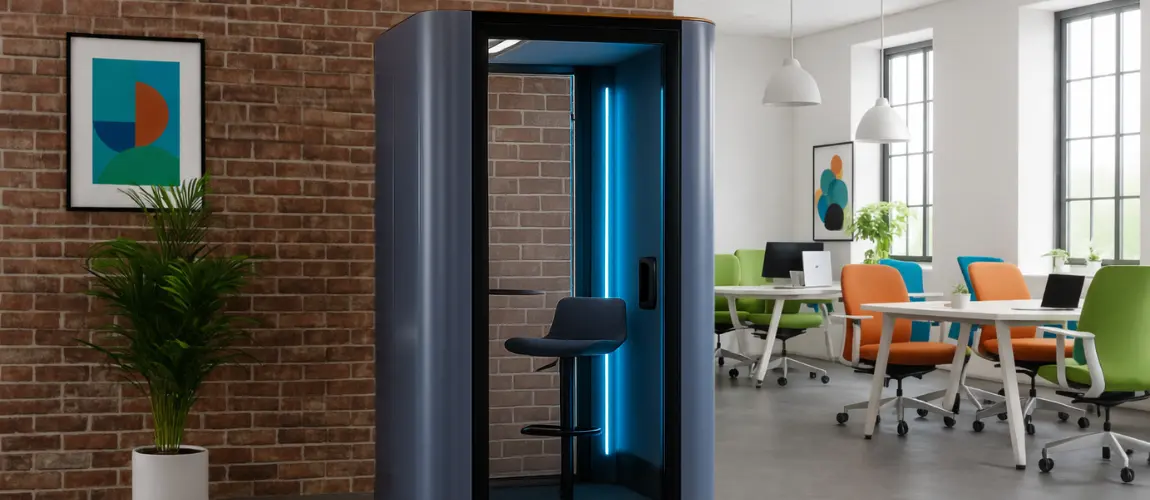
- Provide enclosed or semi-enclosed spaces for calls and focus
- Reduce unpredictable background noise
LIGHTING
Harsh or flickering lighting can negatively impact mood, focus, and energy levels.
Better environments:
- Maximise natural light
- Use adjustable, glare-free task lighting
- Avoid overly bright or uniform lighting schemes
VISUAL COMPLEXITY
Overstimulating spaces can be as draining as noisy ones.
Designing with:
- Calm colour palettes
- Clear sightlines
- Reduced visual clutter
helps create a sense of psychological safety and control.
Thriving offices pay close attention to these details, utilising acoustic treatments, adjustable lighting, and serene visual design to minimise unnecessary sensory stress. When people feel in control of their environment — able to lower noise, soften lighting, or choose a calmer space — they’re far more likely to stay focused and engaged throughout the day.
Neuroinclusion: Better Design for Everyone
Neuroinclusion is often framed as a wellbeing initiative, but in thriving organisations, it is recognised as a performance enabler. Neurodivergent employees, including people with ADHD, Autism, and Dyslexia, often bring exceptional strengths in creativity, pattern recognition, and problem-solving. However, our study on workplace neuroinclusion suggests that traditional offices can create unnecessary barriers through noise, unpredictability, and rigid expectations about how work “should” be done.
A neuroinclusive workplace offers choice rather than rules, flexibility rather than assumptions, and environments that support focus, regulation, and comfort. When these principles are embedded into everyday design, the result isn’t a workplace that feels specialised or segregated — it’s one that simply works better for a wider range of people.
How the Thrive Range Supports Thriving Workplaces
Our neuroinclusive workplace collection, “Thrive”, was developed with these realities in mind. Rather than focusing on a single type of worker or task, the range supports adaptability and choice across the workplace. Thrive solutions include height-adjustable and modular furniture that allows people to tailor their setup, acoustic pods and panels that help reduce noise and visual distraction, and flexible elements that can be reconfigured as teams and needs change.
Importantly, these solutions are designed to integrate naturally into the wider office environment, not as “unique” spaces, but as normal, everyday options that anyone can use. This helps remove stigma while making flexibility and wellbeing part of the culture, not an exception.
The Office as a Place Where People Can Succeed
Ultimately, an office that thrives is one that respects people. It recognises that focus looks different for different individuals, that collaboration works best when it’s intentional, and that wellbeing is closely linked to how supported people feel in their environment. When organisations design offices that reduce friction, support choice, and reflect real human needs, they create spaces where people can do their best work, not just today, but sustainably over time. Thriving offices don’t ask people to change who they are; they create environments that allow everyone to thrive.
---
Our team of interior design experts would love to help you create a neuroinclusive office that champions inclusivity. From initial concept to installation, we offer a complete office fit-out service that includes space design and furniture allocation, as well as office supplies. Open an account today or contact us at sales@codexltd.com for further information!
RELATED ARTICLES:
Latest Posts

 Corporate Social Responsibility
Advancing Neuroinclusion at Codex | A Case Study For Open Doors Initiative Annual Report
Codex is proud to be featured in the Open Doors Initiative Annual Report 2025, sharing our ongoing work to advance neuroinclusion through research, partnerships, and practical workplace solutions.